
What makes exotic leather shoes challenging to care for is not fragility in a dramatic sense. It is that the natural character, finish and scales of exotic leather shoes demand more precision and less routine treatment than ordinary leather.
In this article:
- Why exotic leather needs a different care approach
- The basic care routine that actually works
- What exotic leather shoes need protection from most
- What not to use on exotic leather shoes
- How often exotic leather shoes should really be cared for
- Different exotic leathers, different visual behaviour
- The real goal of care is preservation, not perfection
Why exotic leather needs a different care approach
Unlike traditional leather, exotic materials have distinctive natural characteristics: scales, visible pores or pronounced textures that make each piece unique. Most are also sensitive to harsh products.
Improper cleaning can lead to loss of natural character, dryness or permanent damage to the texture. For a broader introduction to the range of exotic leathers and the shoes made from them, exotic leather shoes for men: styles and types is a useful starting point.
Why standard leather habits can do more harm than good
Each exotic leather type has a different structure and different needs. Several have specific sensitivities that owners should understand before cleaning or storing.
Another key difference from standard calfskin is repairability: calfskin can be fixed when damaged, but exotic leathers generally cannot.

The basic care routine that actually works
Regardless of the exotic leather type, a consistent basic routine applies:
- Cleaning: Use a soft, dry cloth to wipe your exotic leather shoes gently. If a deeper clean is needed, use a slightly damp cloth, then dry immediately.
- Moisturising: Use a conditioner formulated for your specific exotic leather and apply with a soft cloth, focusing on areas that bend often. This prevents cracks from forming.
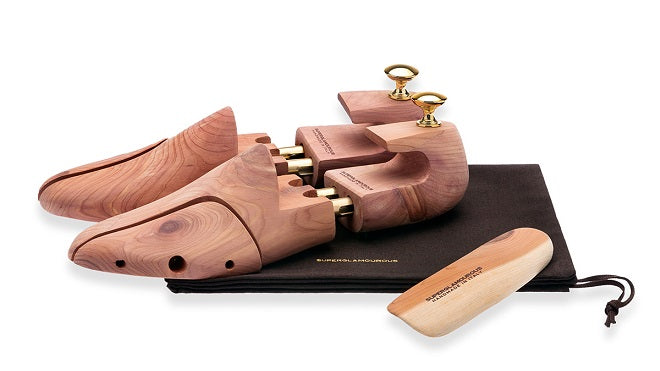
- Storage: Keep exotic leather shoes in a cool, dry place, away from direct sunlight. Use dust bags when storing. For structured exotic leather shoes, shoe trees help maintain the form.

What exotic leather shoes need protection from most
Exotic leather does not respond well to moisture. If the shoes get wet, dry them immediately with a soft towel.
Avoid applying direct heat. Strong heat and prolonged light exposure can alter colour over time, which is why dust bags and shoe trees are worth using consistently.
Why drying them badly can be worse than getting them wet
Exotic leather's texture and pattern are variable. The wrong drying method can permanently alter that texture, and some products can strip the skin's natural oils.
Certain exotic leathers — such as the always-in-style crocodile shoes — are particularly delicate in this respect. They cannot be polished or cleaned like standard calfskin without risking damage to the scales.

What not to use on exotic leather shoes
When choosing products to care for your exotic leather shoes, avoid the following:
- Heavy polish
- Aggressive creams
- Any products containing solvents
Exotic leathers require precision. The wrong product can cause irreversible damage quickly.

Why shine is not the goal
The main appeal of exotic leather is its unique texture and character. Care should preserve that character, not override it.
- Use restraint with waxes: Wax can collect in the creases and scales of exotic leather. Use it minimally, or avoid it entirely.
- Condition lightly: With exotic leather, less is always more. Over-conditioning can be as damaging as neglect.
- Handle the texture gently: Forceful brushing can damage raised areas and ruin the texture that gives the material its value.
- Stick to leather-specific products: All-purpose conditioners for calfskin ignore the specific requirements of exotic materials.
- Do not chase artificial shine: The goal is to keep the natural look intact and defined, not to impose a manufactured finish.
How often exotic leather shoes should really be cared for
Maintenance should be consistent but not excessive. Conditioning every two to three months is usually sufficient, though it depends on how often you wear them and what conditions they are exposed to. Conditioning after prolonged exposure to dry climates or the elements is also advisable.
Different exotic leathers, different visual behaviour
Each exotic leather has specific characteristics that require tailored care. For example, crocodile leather can become too soft with excessive moisturiser. Ostrich leather, on the other hand, dries out faster but does not respond well to oily products. Always match the product and method to the specific leather type to avoid damage.

The real goal of care is preservation, not perfection
With exotic leathers, the goal is to preserve their unique texture and character over time, not to keep them factory-fresh. Respect the needs of each leather type and the shoes will hold their quality for a long time.

For more on the broader world of exotic leathers in men's shoes — from crocodile to python to ostrich — this article covers history, types and what makes each material distinct.